
The hardest part about businesses getting bigger is how complex things become. When the workload increases, traditional hierarchical and monolithic operational models struggle to maintain control, flexibility, and reliability. Modular cell architecture is emerging as a solution. It breaks companies apart into smaller, semi-independent groups that can scale and remain resilient.
At its heart, modularity is not a novel concept. For a long time, businesses have been striving to divide up tasks into smaller, easier-to-manage pieces. But the idea of modular cell architecture goes even further by merging principles from system architecture and organizational design. This creates "cells" that can grow, operate independently, and be measured.
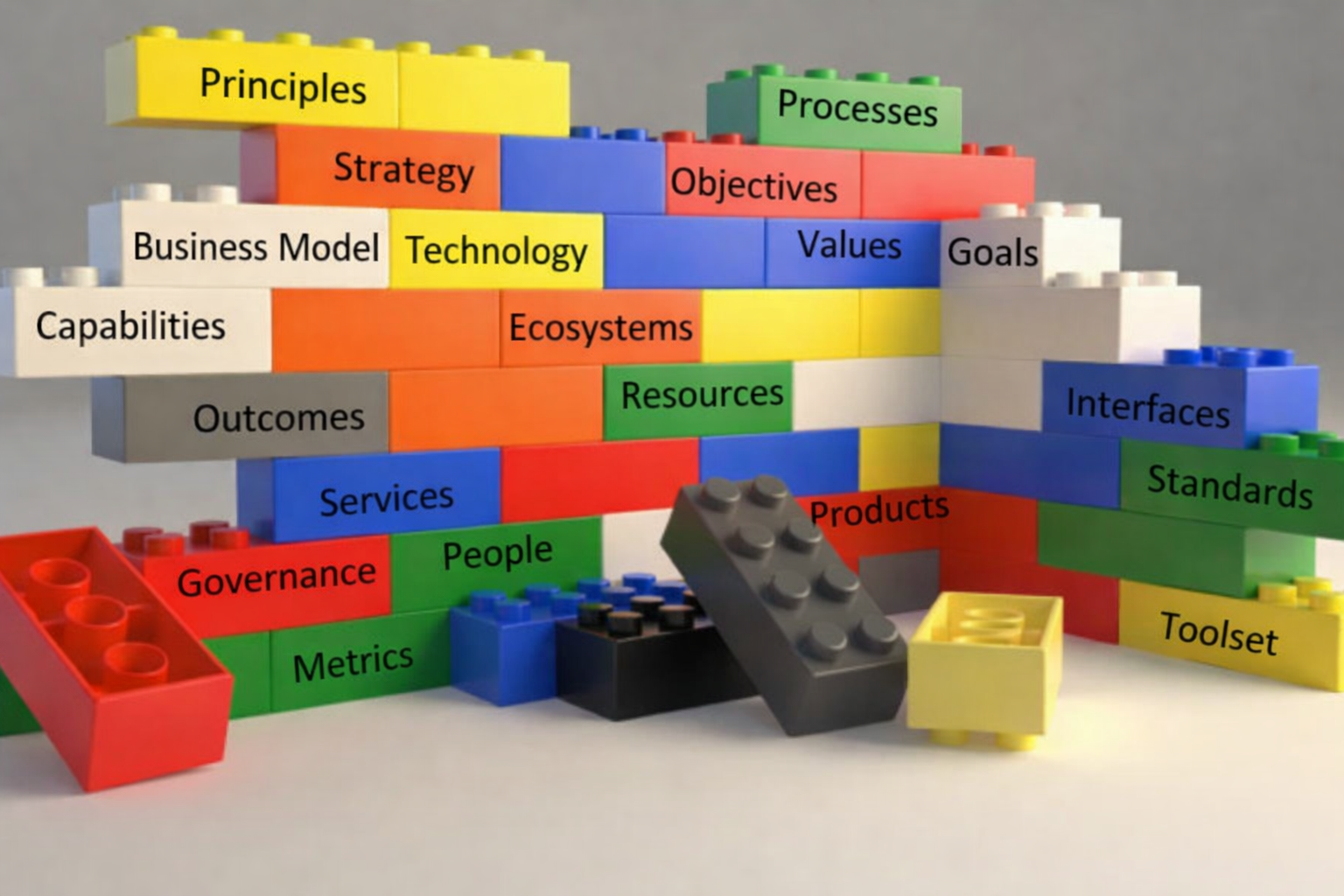
1. What does a cell with modules look like?
A modular organization breaks its work up into smaller, independent portions called modules. These modules can work on their own and still support the business in achieving its main goals. It's easier to keep people accountable and make decisions quickly when each unit is responsible for a specific outcome.
Cell-based design enhances isolation and reduces dependency. Each "cell" has everything it needs to work on its own, like data, systems, and processes. Many big digital systems employ this paradigm to get rid of single points of failure and make sure that systems remain operational.
In business, this approach means that people, procedures, and technology from different departments work together to deliver a specific business capability.
2. Why Companies Are Moving to Cells
There are clear operational issues driving this shift:
- Failure containment: In older systems, one failure could impact the whole organization. Cell-based models keep failures from propagating, so they only impact one unit.
- Scalability: You can add more cells to meet rising demand without having to modify the whole system.
- Shorter cycle times: Modular buildings can be reconfigured more easily and delivered more quickly.
For instance, many platforms have started using cellular models to keep their systems running and handle traffic spikes. In this way, the complete system won't go down if one part fails.
This means that firms can get things done faster, their services are more reliable, and their business and tech activities work better together.
3. Benefits of Operations in the Workplace
There are many benefits to institutions that use a modular cell layout correctly:
1. More Reliable and Stronger
Cells isolate where failures occur. Problems with one unit don't affect the whole company. This improves uptime and service continuity.
2. Better control and management
There are rules, interfaces, and ways to report that every cell has to obey. This lets you audit without slowing down central operations.
3. A scalable operating model
Instead of complicating current structures, organizations can grow horizontally by adding additional cells.
4. Better integration of technology with business
Cells are usually set up to meet the needs of the business, which makes it easier to hold individuals accountable and cuts down on planning time.
Research also suggests that modular systems help people specialize and organize their work more effectively, which makes problem-solving and organizing more successful.
4. Challenges and Considerations
Modular cell architecture has both good and poor points:
- More advanced design: To make boundaries, linkages, and relationships, you need to know a lot about architecture.
- Costs of coordination: If cells aren't governed correctly, they can get split, which could make it harder for them to operate together.
- Higher initial cost: In some cases, developing autonomous, fully functional units involves an upfront investment in systems and integration.
In theory, this isn’t always true, but in practice, this is where a lot of companies go wrong. Modularity can make things more complicated instead of less complicated if there isn't good governance, observability, and unambiguous operating models.
5. The Next Step
Changing the structure of modular cells isn't the only thing that changes; how they operate must also change. It needs to break down process design, system architecture, data flows, and governance frameworks into pieces that fit together effectively and can also operate independently.
For big companies, the possibilities are immense: less risk in operations, better scalability, and huge benefits in execution efficiency.
On the other hand, success requires precise execution, which means making sure that each cell is not just independent but also regulated, observable, and in line with the organization's goals.
In a world where complexity is continuously increasing, modular cell design is a fantastic technique to make things clearer and more stable over time.
Key Takeaways
- Modular cell architecture organizes businesses into independent, outcome-driven units.
- Cells operate autonomously with alignment through governance and shared standards.
- Enables scalable growth without increasing organizational complexity.
- Failure containment improves system resilience and reliability.
- Clear interfaces and accountability are essential for effective design.
- Strong governance prevents fragmentation and ensures coordination.
- Drives faster execution, adaptability, and measurable performance.
6. Conclusion
Modular cell design moves businesses away from large, monolithic structures and toward flexible, resilient operating models that are based on self-contained, regulated modules. It makes it easier to find and fix failures, speeds up execution, and gives you more visibility into operations while maintaining auditability and control.
The real benefit is in finding the right balance between autonomy and enterprise alignment, which lets companies grow without making things more complicated. However, successful adoption requires more than just a structural change. It needs clear limits, solid governance structures, and well-integrated technologies and data. If you don't have these, fragmentation can happen.
Companies that use this model with discipline are better equipped to handle complexity and achieve consistent, measurable operational results on a large scale.