
In the corporate world today, things change quickly, so companies are always under pressure to adapt, come up with new ideas, and deal with uncertainty. But a lot of businesses still run like machines designed to control, not learn. Living Systems Architecture is a strong new way of thinking that comes into play here.
This approach doesn't see organizations as fixed things. Instead, it sees them as living systems that can change, adapt, and learn all the time.
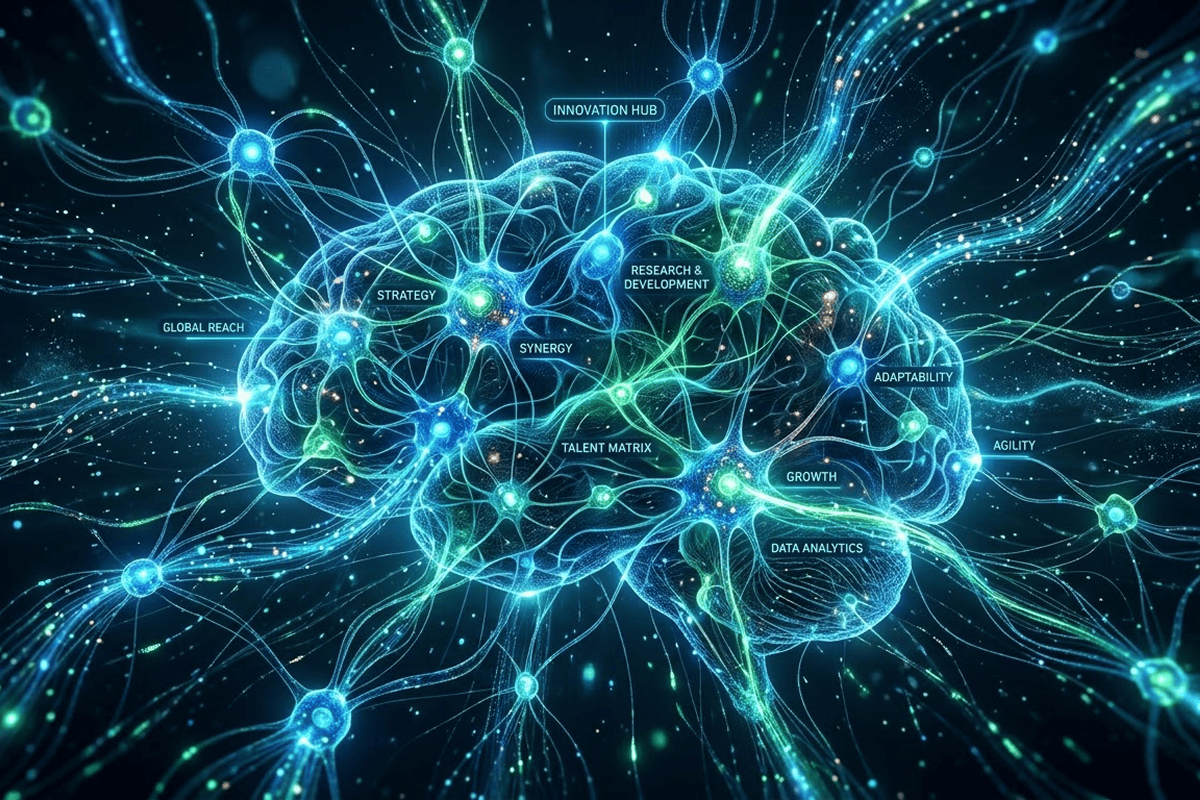
1. What is the architecture of living systems?
Biological and ecological systems are what living systems architecture is based on. Systems in nature aren't set in stone; they change, arrange themselves, and grow based on what they learn from their surroundings.
An open, self-organizing system that interacts with its surroundings all the time and is kept alive by flows of information, energy, and resources is called a living system.
This involves creating frameworks for businesses that:
- Continuously learn from observation and action
- Be ready for changes inside and outside the company
- Promote feedback loops and repeated attempts
- Change over time instead of staying the same
This is very different from typical organizational design, which focuses on control, hierarchy, and predictability.
2. Why it's hard for traditional organizations to learn
Most organizations are built on mechanistic models, which means they work like machines:
- Roles that don't change and strict hierarchies
- Slow techniques for making decisions
- Limited integration of feedback
- Not wanting to change
These frameworks might have worked in stable situations, but they don't work in environments that are constantly changing and uncertain.
Living systems, on the other hand, do well in complicated environments. They are made to interact, change, and grow all the time.
3. Core Principles of Living Systems Architecture
1. Self-Organization Instead of Central Control
In living systems, order arises organically from the interactions among components rather than being enforced from above.
Likewise, businesses should:
- Give teams the power to make choices
- Encourage decentralized action
- Allow local problem-solving
Self-organization lets people respond faster and come up with new ideas.
2. Loops of feedback that never stop
Living things need constant feedback to stay alive and grow. Organizations need to do the same thing.
This includes:
- Systems for real-time data
- Adding feedback from customers
- Loops for keeping an eye on performance
Feedback makes sure that decisions aren't set in stone but are always getting better.
3. Networks that are modular and connected
There are several subsystems in living systems that are both separate and related to each other.
Studies reveal that living systems prefer modular and hierarchical network topologies, which make them more flexible and resilient.
In businesses, this means:
- Business units or teams that work together
- Clear connections between functions
- Structures that can grow and change
4. Change and Growth
Living systems change with time, while static systems do not.
Companies need to:
- Keep trying new things and learning
- Change strategies based on what happens
- Instead of locking processes, let them change
This change takes businesses from models based on planning to models based on learning.
5. Learning in layers (Pace Layers)
Different complex systems change at different rates. Pace layers show how distinct sections of a system change at different speeds.
For example:
- Culture changes very slowly
- Processes change a little bit
- Technology changes quickly
Organizations need to create architectures that let these layers work together without any problems.
4. Creating Organizations That Learn
Companies must rethink their design in three important areas in order to create a learning organization utilizing living systems architecture:
1. Designing the structure
Change from strict hierarchies to flexible, networked structures:
- Teams from different departments
- Agile teams or pods
- Making decisions in a decentralized way
This makes it possible for learning cycles to happen more quickly and for things to change.
2. Systems for Data and Feedback
Data is needed to learn.
Organizations need to build:
- Data pipelines that work together
- Dashboards in real time
- Systems that support decision-making
These systems are like the organization's "nervous system," making it possible for people to be aware and respond.
3. Frameworks for Governance and Decision-Making
There are laws and feedback that guide living systems, so they aren't random.
Businesses need:
- Clear ownership of decisions
- Set rules for how to run things
- Clear processes
This makes sure that being flexible doesn't cause chaos.
5. The Importance of Culture in Living Systems
The correct culture is necessary for a living system to exist.
Organizations must encourage:
- Psychological safety
- Being curious and trying new things
- A philosophy of always learning
Culture is like the operating system that lets people learn and change.
6. Real-World Inspiration: Learning from Living Systems
New ideas in architecture and technology are already using ideas from biological systems.
For instance, research in adaptive environments reveals that systems may respond, learn, and change based on how users engage with them, making settings that are both dynamic and smart.
Living labs are another example of how real-world settings may be used for continuing experimentation and co-creation, which leads to new ideas and learning.
These same ideas can be applied within businesses.
7. Advantages of Living Systems Architecture
This strategy helps organizations by:
1. Faster adjustment
They promptly adapt to changes and problems in the market.
2. Always coming up with new ideas
Learning becomes a part of how things are done every day.
3. Strength
They can withstand disruptions and grow as a result.
4. Making Better Choices
Feedback loops that are based on data make things more accurate and faster.
8. Problems with Implementation
Even though it has advantages, moving to a living systems architecture is not straightforward.
Some common problems are:
- Opposition to decentralization
- No data infrastructure
- Barriers in culture
- Misalignment between strategy and execution
This change needs more than simply changes to the structure; it also needs a change in how people think.
9. What Will Happen to Organizations in the Future
Organizations that learn faster than their environments change will succeed in the future.
Living systems architecture gives us a vision of the future, when organizations are not fixed things but living, changing ecosystems.
Instead of saying:
"How do we manage the system?"
Leaders should begin to inquire:
"How do we make systems that can learn, change, and grow on their own?"
Key Takeaways
- Shift from control to continuous learning
- Living Systems Architecture enables adaptability
- Feedback loops and data improve decisions
- Decentralization drives innovation
- Learning culture is critical
- Success depends on learning speed
10. Final Thoughts
Living Systems Architecture is a big change in how we build businesses. It takes us from hard, machine-like structures to flexible, adaptable systems that can learn all the time.
In a world that is full of uncertainty, complexity, and change, this is not only a benefit; it is a must.
Companies that use this strategy will not only survive change; they will grow with it.